

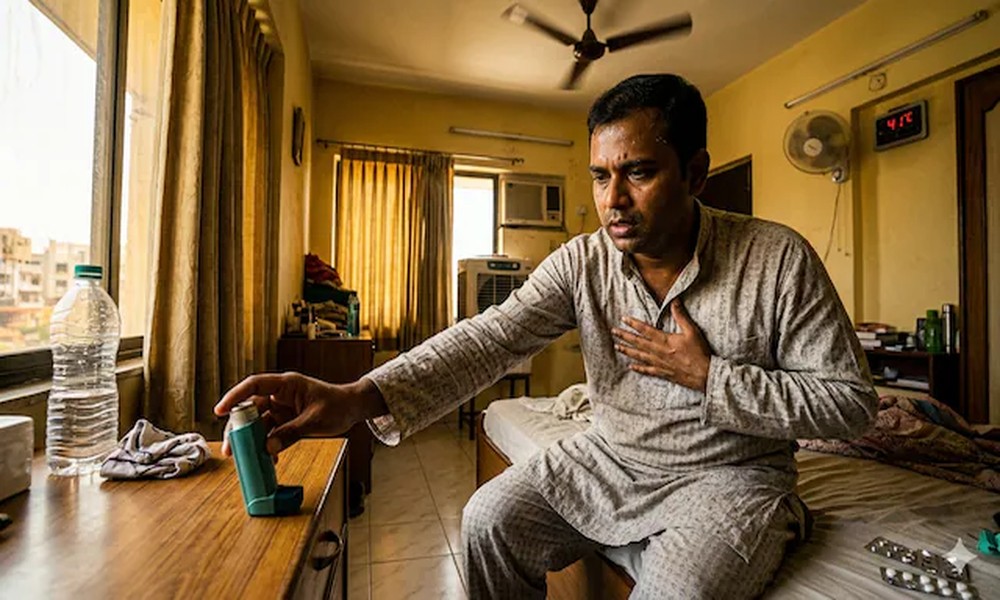
Every summer, people have the same irritating problem: a cough that just does not go away. Tightness in the chest and difficulty breathing that seems to come out of nowhere. Breathing problems in summer are far more common than people expect, and in most cases, the air outside is directly responsible.
This is not about heat exhaustion or sunstroke. This is about what happens to the lungs when the season itself becomes a health hazard.
The Air Changes in Summer. Not for the Better.
Pollution is a summer problem; ground-level ozone rises sharply because heat accelerates chemical reactions between sunlight and pollutants already floating in the air. Traffic fumes, construction dust, and smoke from agricultural burning all behave differently when temperatures cross 40 degrees. They linger. They concentrate.
Inhaling this air repeatedly does real damage to the airway lining. For someone with asthma or COPD, this can mean a sudden and severe flare. For someone with no prior diagnosis, it can quietly chip away at lung function over weeks without any single dramatic symptom.
Dust Is Not Just Dirt
In Sri Ganganagar and nearby areas, people are more than aware of dust storms. Rajasthan has a desert, after all.
The particles that matter most are invisible. PM2.5, fine particulate matter, passes straight through the nose and throat without being filtered. It reaches the deep airways. It embeds in lung tissue, causing inflammation that does not go away easily.
Children’s lungs are still developing. One bad season of heavy dust exposure during childhood can affect respiratory capacity for the rest of one’s life. That is not an exaggeration; it is documented in pulmonary research across similar climatic regions.
Nobody Talks About Dehydration and the Lungs
This is where most summer health advice falls short.
The airway walls are coated in mucus. Not a pleasant thought, but a necessary one, because that mucus is what catches dust, allergens, and bacteria before they travel further down. It is the lungs’ first line of filtering.
When someone is dehydrated, that mucus layer dries out and thins. Things that would normally get trapped now slip through. This is a major reason why breathing problems in summer peak during heat waves, specifically, not just on warm days in general.
Drinking water regularly throughout the day, not just when thirsty, is one of the simplest things a person can do for their lung health in summer.
Symptoms That Should Not Be Waited Out
People are remarkably good at normalising symptoms. A wheeze becomes “just how things are in summer.” Chest tightness is blamed on stress. A cough that has lasted three weeks is still being called “post-dust irritation.”
These are the warning signs that need medical attention, not patience:
- Wheezing or a whistling noise during breathing
- Chest tightness that persists even after rest
- Getting breathless on a short walk or climbing one flight of stairs
- Cough that stays for more than two weeks
- Using an inhaler more often than prescribed
None of these should be dismissed in summer, as they are all calls for help.
Who Bears the Worst of It
People managing asthma, COPD, or chronic bronchitis already know summer is hard. What catches many off guard is how badly the season affects those with no existing diagnosis.
A pre-existing heart or kidney condition can put extra pressure on already-stressed lungs. Routine check-ups at a reliable pulmonology hospital in Sri Ganganagar before temperatures peak, not after the first bad episode, is genuinely the smarter approach. Prevention here is not a cliche. It is the difference between manageable and critical.
Protecting the Lungs Through the Season
None of this requires expensive solutions. The basics work.
Stay indoors between noon and 4 pm. That window sees the highest combination of heat, ozone, and dust. If going out is unavoidable, a well-fitted mask makes a real difference.
Shut windows during dust storms rather than leaving them open in hopes of a cross breeze. Use an air purifier if possible.
Avoid burning anything in enclosed or semi-enclosed spaces. Incense, mosquito coils, and especially solid cooking fuels raise indoor particulate levels significantly.
And if there is any history of lung problems in the family, get a spirometry test done before summer is halfway through. It takes ten minutes and tells a doctor exactly how the lungs are functioning.
One Last Thing
Lungs do not announce damage early. By the time breathing feels noticeably restricted during routine activity, the inflammation or narrowing has usually been building for weeks.
For anyone across the region who has been putting off that check-up, the best hospital in Sri Ganganagar and nearby areas for respiratory care is closer than most people think. The harder part is deciding not to wait.
