

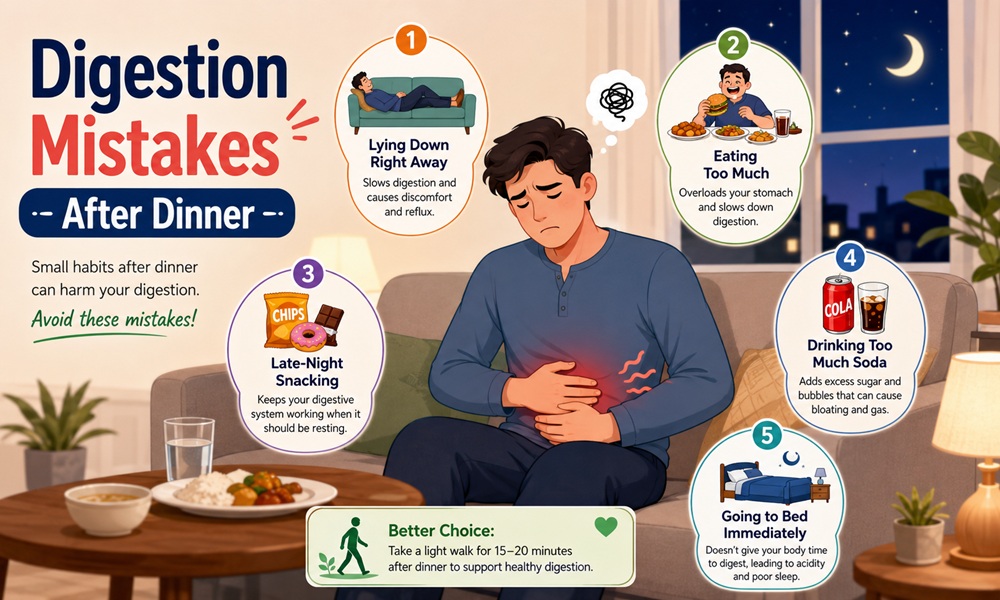
Digestion doesn’t stop when you put down your fork; the half hour after dinner decides whether you feel light or heavy, settled or refluxy. Here are the after-dinner habits that sabotage digestion, and the small changes that fix them.
Mistake: lying down or sleeping too soon
This is the big one. When you recline within an hour or two of eating, gravity no longer keeps stomach contents down, so acid can flow back into the food pipe, causing heartburn and disrupted sleep. Slouching on the couch does the same by compressing your stomach.
Do this instead: Stay upright and wait 2-3 hours before lying down. If you have reflux, raise the head of your bed slightly.
Mistake: a large, heavy, late dinner
Big, fatty or spicy meals sit longer in the stomach, slowing digestion and increasing pressure that pushes acid upward. Eaten late, they also collide with your body’s wind-down for sleep.
Do this instead: Make dinner your lightest large meal, and finish it earlier in the evening.
Mistake: eating too fast
Wolfing your food means swallowing air and under-chewing, both of which lead to bloating and a heavy, gassy feeling afterwards.
Do this instead: Slow down, chew thoroughly, and pause between bites. Your stomach gets a head start.
The most useful after-dinner habit: a short walk
Here’s an insight worth more than any supplement. A gentle 10-15 minute walk after dinner does three things at once:
- Eases bloating: light movement stimulates the gut to move food along, reducing belching and gas. In one study, people who walked after meals reported noticeably fewer digestive complaints after a few weeks.
- Blunts the blood-sugar spike: walking helps your muscles use glucose, flattening the post-meal sugar rise, which is especially valuable after your largest meal of the day.
- Keeps you upright: unlike collapsing on the sofa, walking reduces reflux risk.
A caveat: keep it gentle and on flat ground. Vigorous exercise right after a big meal can trigger reflux or cramps. If you’re very prone to acidity, wait 10-15 minutes before setting off.
How to spend the hour after dinner
Flip the mistakes into a simple routine and digestion settles on its own:
- Stay upright: sit or potter about rather than sinking into the sofa.
- Take a gentle stroll: ten to fifteen easy minutes eases bloating and steadies blood sugar.
- Sip, don’t gulp: a little warm water or a herbal tea like peppermint, fennel or ginger can soothe the stomach.
- Give it time: leave a clear two to three hours before lying down or going to bed.
After-dinner do’s and don’ts
| Do | Don’t |
| Take a gentle 10-15 min walk | Lie down or nap within 2-3 hours |
| Sit or stand upright | Slouch or recline on the couch |
| Keep dinner light and earlier | Eat large, fatty, spicy late meals |
| Sip water through the meal | Drink large volumes that overfill the stomach |
| Wait before vigorous exercise | Sprint or do intense workouts immediately |
Frequently asked questions
Is it bad to sleep right after dinner?
Yes, consistently sleeping soon after eating promotes reflux, slows digestion and is linked to poorer sleep and metabolic strain over time. Leave 2-3 hours between dinner and bed.
Does a walk after dinner really help?
It does. Even a short, easy walk supports digestion, reduces bloating and lowers post-meal blood sugar more effectively than walking later or sitting still.
Is it bad to drink water right after a meal?
No, a normal glass of water with or after a meal is fine and won’t “dilute” digestion, a common myth. What can cause trouble is gulping large volumes or downing fizzy drinks, which overfill the stomach and add pressure that nudges acid upward. Sip rather than chug.
How long after eating should I wait to exercise?
For a gentle stroll, you can go almost straight away. For anything vigorous like running or a gym session, wait about 2-3 hours after a full meal so blood can focus on digestion rather than your muscles, which also lowers the chance of cramps and reflux.
Why do I get bloated every night after dinner?
Common causes include eating too fast, oversized portions, fizzy drinks with the meal, and lying down soon after. Heavy, fatty or very fibrous late dinners ferment slowly and add to the feeling. Tweak those habits before assuming a medical cause.
Is fruit after dinner a bad idea?
For most people fruit is fine, but if you’re prone to bloating or reflux, large amounts of high-fructose fruit late at night can ferment and add gas. A small portion earlier in the meal is gentler.
Two extra traps worth avoiding: brushing aside heartburn as normal when it happens most nights, and relying on a cigarette or a sugary dessert to “settle” the stomach, both of which actually relax the valve that keeps acid down.
Persistent acidity, regular nighttime reflux or pain after eating deserves a doctor’s review rather than ongoing self-management.
