

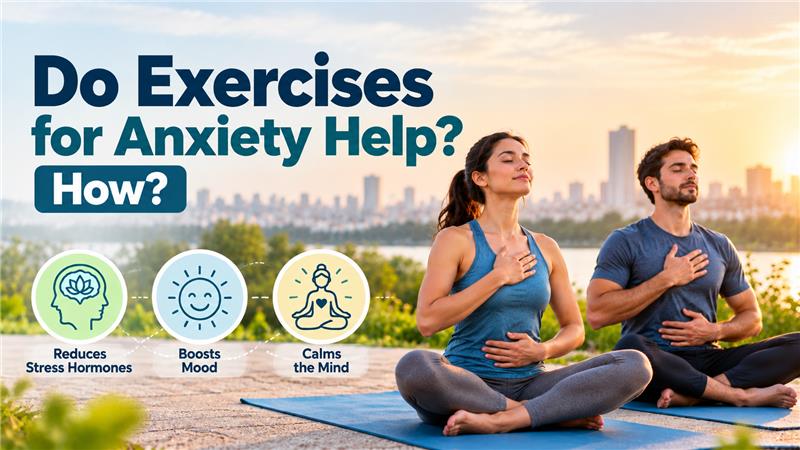
Yes. Certain exercises soothe anxiety. Since ages, people have been practicing exercises to relieve anxious thoughts. According to the Anxiety & Depression Association of America (ADAA), around 19% of adults in the U.S. suffer from anxiety. More than half of the people don’t even look for treatment options to manage the symptoms. The reason is a lack of awareness. Certain breathing techniques, physical exercises, and meditation can effectively help manage mental health concerns like anxiety and depression. Exercises for stress and anxiety, if done the right way, can heal long-term anxiety. They can help shake off the day’s stress, leaving the mind refreshed and relaxed.
When a person feels constantly stressed and worried, exercise can calm the mind. The blog explains how exercise relieves anxiety and brings inner peace and stability.
How Exercises Help with Anxiety?
Breathing Exercises
Anxiety shows up through the physical symptoms of dizziness or a feeling of breathlessness. When one suffers from anxiety, breathing gets fast and shallow. Deep and quick breathing is extremely effective at lowering anxiety. Some of the most effective breathing techniques include alternate nostril breathing, resonance frequency breathing, pursed-lip breathing, and simple breathing exercises. One can practice these exercises standing, sitting, or lying down. For best results, practice slow breathing regularly. A 5-minute practice every day can effectively brush off anxiety.
Muscle Relaxation
One with anxiety may suffer from muscle pain and tension. According to research from Taylor & Francis, progressive muscle relaxation helps lower anxiety. Let’s have a look at how one can relax the muscles step by step –
- A comfortable sitting position in a quiet place
- Closed eyes. Slow breathing in through the nose and out through the mouth
- Making a fist and squeezing it tightly
- Holding the squeezed fist for a few seconds.
- Noticing the tension felt in the hand
- Slowly opening the fingers and feeling the tension leave the hand.
- The hands feel lighter and relaxed
- Tensing and releasing different muscle groups to relax them.
Visualization Techniques
Visualization techniques help release anxiety from the mind. One with anxiety can visualize a place, real or imaginary. Visualization techniques have a healing effect on an anxious mind. Not everyone can do this well. The techniques work best for those who love to imagine or visualize. The image must be calm and peaceful. The image also has to be easy so one can think of it easily when anxiety hits. A calming picture, closed eyes, and slow breaths in and out through the nose and mouth soothe the mind in minutes.
Meditation
Meditation calms the mind and senses. One can feel the peace and balance in one’s overall health. Meditation helps one stay stable and maintain inner peace. The benefits of meditation are endless. With meditation, one can spend the whole day in calm. Meditation may also help manage one’s mental health symptoms and physical health conditions. It brings both emotional and physical stability. Some of the most important meditation techniques include body scan meditation, mantra meditation, mindful meditation, yoga, and Tai chi. Visualization is also a kind of meditation.
Meditation and mindful exercises also help individuals with conditions like chronic pain, depression, cardiac issues, high blood pressure, irritable bowel syndrome, headache, sleep issues, etc. Along with anxiety, one can work on these concerns too, with the help of exercise.
Blocking Anxious Thoughts
It’s not always possible to understand when one will feel anxious. The thoughts can be harmful sometimes, making the anxiety symptoms worse. It’s necessary to break the chain of anxious thoughts so one can think clearly and respond naturally to the next thoughts. It’s advised to try different ways to block the anxious thought processes. Various ways to interrupt the anxious thoughts include –
- Singing songs in a silly voice
- Talking about the thoughts in a funny voice
- Choosing a nice thought like happy places, good food, and loved ones
- Reading a book
- Listening to songs with focus on lyrics
- Being aware of the attention-shifting process
How Does Exercise Help Reduce Anxiety?
Regular exercise helps lower anxiety in many ways.
Releasing feel-good chemicals: When one exercises, the body releases endorphins. Endorphins are natural brain chemicals that improve well-being.
Brushing off worries: Focusing on physical activity or positive thoughts instead of worries can break the cycle of negative thoughts.
Regular exercise brings several mental and physical benefits. Exercise helps anxious individuals build confidence, engage in more social interaction, and cope with anxious thoughts. If physical exercise isn’t possible, focus on daily physical activities. Any activity that works your muscles and requires energy. Gardening, cleaning the interior, washing the car, walking around the balcony, or doing laundry and washing utensils can also help one stay focused on the task and block anxious thoughts.
Tips to Easily Get Started on Anxiety Management
According to recent federal guidelines, adults should get 2.5 hours of moderate-intensity physical activity each week and 1.5 hours of vigorous-intensity activity, or a combination of both, to support physical and mental health. One can –
- Walking, jogging, or dancing for half an hour 3 times a week.
- Setting small goals daily and working on those. Frequency and consistency are important. Walking for 15-20 minutes every day is better than doing it once a week.
- Fun exercises are enjoyable and effective. Extroverts can join classes or group tours. Introverts can go on solo ventures.
- Having an exercise partner is effective. When one organizes the exercise routine with a friend or a partner, one has to stay committed.
- The exercise program requires patience.
Final Takeaway
Anxiety can disturb your regular thoughts and activities. Over the years, studies have proven the benefits of exercise for mental and physical health. Anxiety decreases as you become more mindful. Individuals who suffer from anxiety effectively benefit from exercise. Find the type of exercise you enjoy most. Try new anxiety exercises to help you relax and de-stress the mind. Keep a guide for the first few days if you feel the need. The only thing that matters is that exercise helps you lower your anxiety.
